Gruppe · Eingeweidesysteme
Systema urinarium
Urinary system
- System
- Eingeweidesysteme
- Regionen
- Rumpf, Abdomen, Becken
BeschreibungUngeprüft
Beschreibungen gibt es nur auf Englisch.
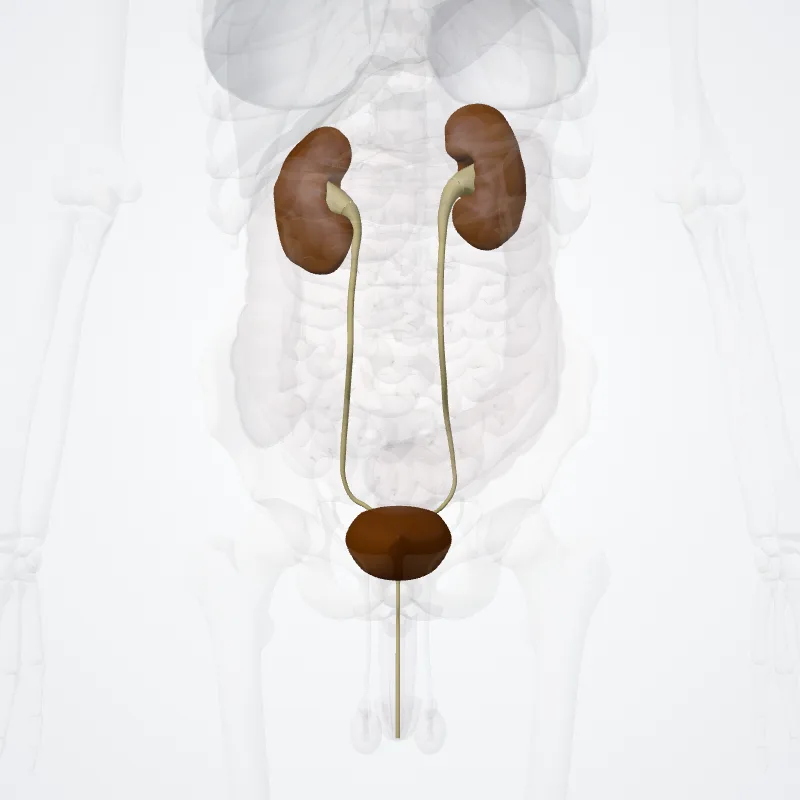
The urinary system, also known as the renal system or urinary tract, consists of the kidneys, ureters, bladder, and the urethra.
The purpose of the urinary system is to eliminate waste from the body, regulate blood volume and blood pressure, control levels of electrolytes and metabolites, and regulate blood pH.
The urinary tract is the body's drainage system for the eventual removal of urine.
The kidneys have an extensive blood supply via the renal arteries which leave the kidneys via the renal vein.
Each kidney consists of functional units called nephrons.
Following filtration of blood and further processing, wastes (in the form of urine) exit the kidney via the ureters, tubes made of smooth muscle fibres that propel urine towards the urinary bladder, where it is stored and subsequently expelled from the body by urination (voiding).
The female and male urinary system are very similar, differing only in the length of the urethra.Urine is formed in the kidneys through a filtration of blood.
The urine is then passed through the ureters to the bladder, where it is stored.
During urination, the urine is passed from the bladder through the urethra to the outside of the body. 800–2,000 milliliters (mL) of urine are normally produced every day in a healthy human.
This amount varies according to fluid intake and kidney function.
Quelle: Wikipedia · Textlizenz: CC BY-SA 3.0 · Dieser Text stammt aus den Quelldaten und wurde noch nicht von einer Person geprüft.
Bestandteile
Namen
- Latein
- Systema urinarium
- Englisch
- Urinary system
- Französisch
- Système urinaire
- Spanisch
- Sistema urinario
- Portugiesisch
- Sistema urinário