Landmark · Skin & body regions
External nose
Nasus externus
- System
- Skin & body regions
- Regions
- Head
- Side
- Right
- Landmark on
- Nasal region
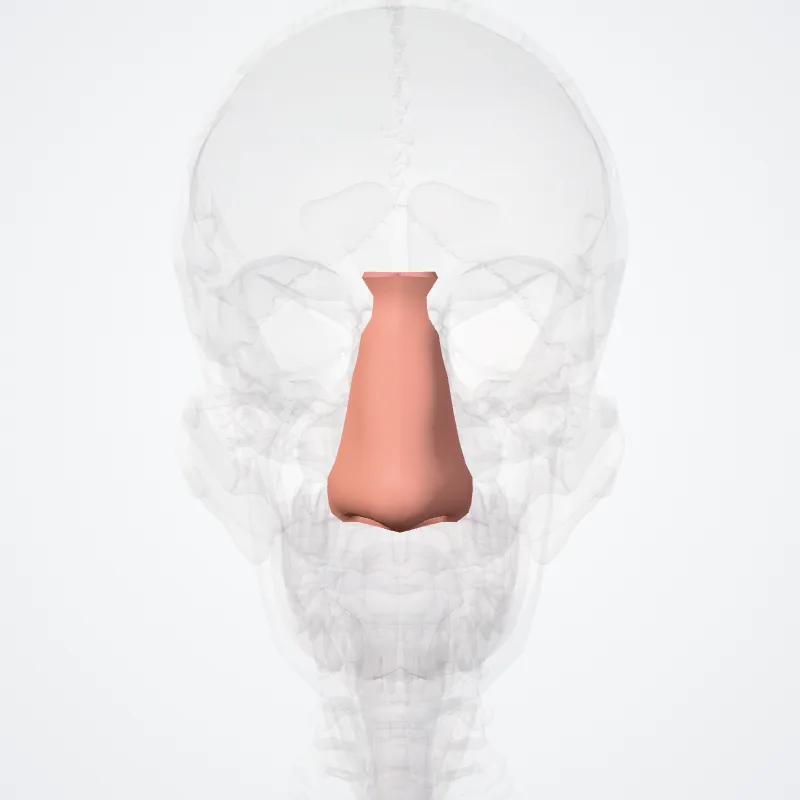
DescriptionUnreviewed
The human nose is the most protruding part of the face.
It bears the nostrils and is the first organ of the respiratory system.
It is also the principal organ in the olfactory system.
The shape of the nose is determined by the nasal bones and the nasal cartilages, including the nasal septum which separates the nostrils and divides the nasal cavity into two.
On average the nose of a male is larger than that of a female. The nose has an important function in breathing.
The nasal mucosa lining the nasal cavity and the paranasal sinuses carries out the necessary conditioning of inhaled air by warming and moistening it.
Nasal conchae, shell-like bones in the walls of the cavities, play a major part in this process.
Filtering of the air by nasal hair in the nostrils prevents large particles from entering the lungs.
Sneezing is a reflex to expel unwanted particles from the nose that irritate the mucosal lining.
Sneezing can transmit infections, because aerosols are created in which the droplets can harbour pathogens.
Another major function of the nose is olfaction, the sense of smell.
The area of olfactory epithelium, in the upper nasal cavity, contains specialised olfactory cells responsible for this function.
The nose is also involved in the function of speech.
Nasal vowels and nasal consonants are produced in the process of nasalisation.
The hollow cavities of the paranasal sinuses act as sound chambers that modify and amplify speech and other vocal sounds.
There are many plastic surgery procedures on the nose, known as rhinoplasties available to correct various structural defects or to change the shape of the nose.
Continue reading on Wikipedia →
Source: Wikipedia · Text licence: CC BY-SA 3.0 · This text comes from the source data and has not been reviewed by a person yet.
Names
- Latin
- Nasus externus
- English
- External nose
- French
- Nez externe
- Spanish
- Nariz externa
- Portuguese
- Nariz externo