Visceral systems
Gallbladder
Vesica biliaris
- System
- Visceral systems
- Regions
- Trunk, Abdomen
- Part of
- Digestive system
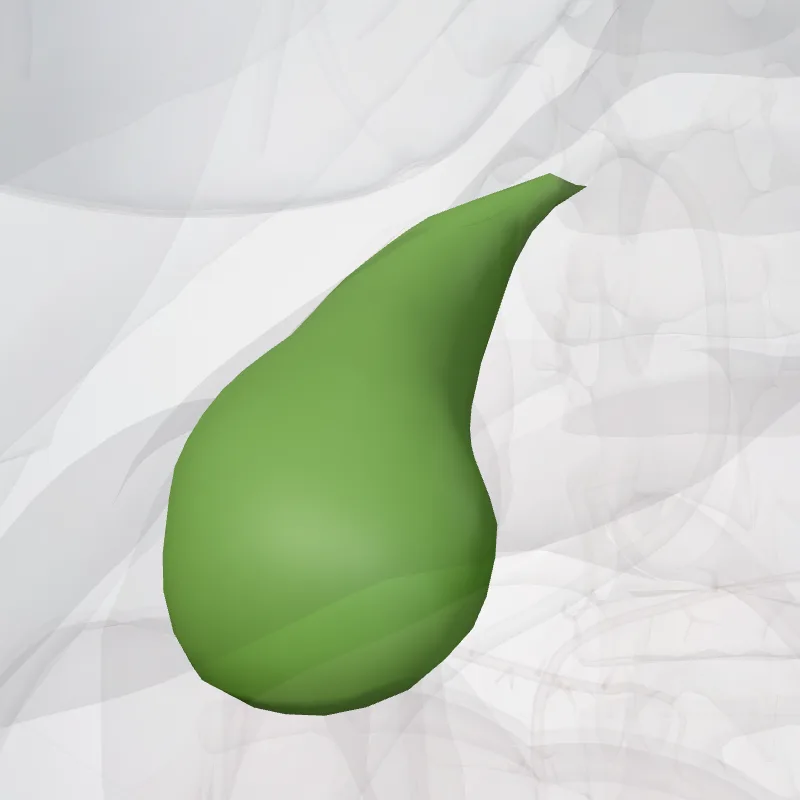
DescriptionUnreviewed
In vertebrates, the gallbladder, also known as the cholecyst, is a small hollow organ where bile is stored and concentrated before it is released into the small intestine.
In humans, the pear-shaped gallbladder lies beneath the liver, although the structure and position of the gallbladder can vary significantly among animal species.
It receives and stores bile, produced by the liver, via the common hepatic duct, and releases it via the common bile duct into the duodenum, where the bile helps in the digestion of fats.
The gallbladder can be affected by gallstones, formed by material that cannot be dissolved – usually cholesterol or bilirubin, a product of haemoglobin breakdown.
These may cause significant pain, particularly in the upper-right corner of the abdomen, and are often treated with removal of the gallbladder called a cholecystectomy.
Cholecystitis, inflammation of the gallbladder, has a wide range of causes, including result from the impaction of gallstones, infection, and autoimmune disease.
Continue reading on Wikipedia →
Source: Wikipedia · Text licence: CC BY-SA 3.0 · This text comes from the source data and has not been reviewed by a person yet.
Landmarks
- Body of gallbladder
- Fundus of gallbladder
- Infundibulum of gallbladder
- Neck of gallbladder
Names
- Latin
- Vesica biliaris
- English
- Gallbladder
- French
- Vésicule biliaire
- Spanish
- Vesícula biliar
- Portuguese
- Vesícula biliar