Group · Visceral systems
Genital systems
Systemata genitalia
- System
- Visceral systems
- Regions
- Trunk, Pelvis
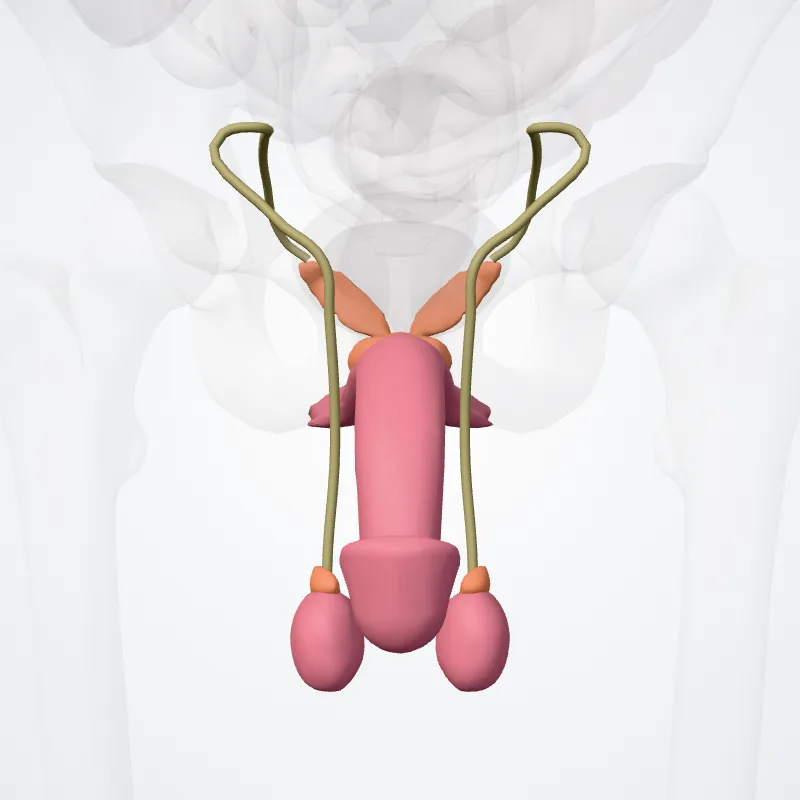
DescriptionUnreviewed
The human reproductive system usually involves internal fertilization by sexual intercourse.
During this process, the male inserts their erect penis into the female's vagina and ejaculates semen, which contains sperm.
The sperm then travels through the vagina and cervix into the uterus or fallopian tubes for fertilization of the ovum.
Upon successful fertilization and implantation, gestation of the fetus then occurs within the female's uterus for approximately nine months, this process is known as pregnancy in humans. Gestation ends with childbirth, delivery following labor.
Labor consists of the muscles of the uterus contracting, the cervix dilating, and the baby passing out the vagina (the female genital organ).
Human's babies and children are nearly helpless and require high levels of parental care for many years.
One important type of parental care is the use of the mammary glands in the female breasts to nurse the baby.
The female reproductive system has two functions: The first is to produce egg cells, and the second is to protect and nourish the offspring until birth.
The male reproductive system has one function, and it is to produce and deposit sperm. Humans have a high level of sexual differentiation.
In addition to differences in nearly every reproductive organ, numerous differences typically occur in secondary sexual characteristics.
Source: Z-Anatomy · Text licence: CC BY-SA 4.0 · This text comes from the source data and has not been reviewed by a person yet.
Parts
Names
- Latin
- Systemata genitalia
- English
- Genital systems
- French
- Système génital
- Spanish
- Sistemas genitales
- Portuguese
- Sistemas genitais