Visceral systems
Greater omentum
Omentum maius
- System
- Visceral systems
- Regions
- Trunk, Abdomen
- Part of
- Peritoneal structures
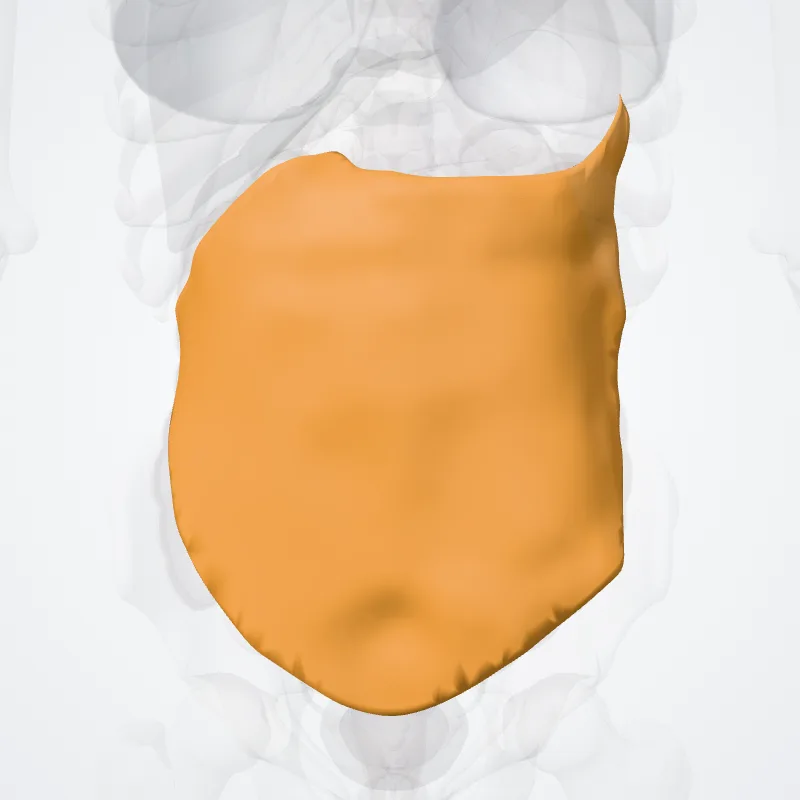
DescriptionUnreviewed
The greater omentum (also the great omentum, omentum majus, gastrocolic omentum, epiploon, or, especially in animals, caul) is a large apron-like fold of visceral peritoneum that hangs down from the stomach.
It extends from the greater curvature of the stomach, passing in front of the small intestines and doubles back to ascend to the transverse colon before reaching to the posterior abdominal wall.
The greater omentum is larger than the lesser omentum, which hangs down from the liver to the lesser curvature.
The common anatomical term "epiploic" derives from "epiploon", from the Greek epipleein, meaning to float or sail on, since the greater omentum appears to float on the surface of the intestines.
It is the first structure observed when the abdominal cavity is opened anteriorly (from the front).
Continue reading on Wikipedia →
Source: Wikipedia · Text licence: CC BY-SA 3.0 · This text comes from the source data and has not been reviewed by a person yet.
Names
- Latin
- Omentum maius
- English
- Greater omentum
- French
- Grand omentum
- Spanish
- Omento mayor
- Portuguese
- Maior omento