Group · Cardiovascular system
Hepatic portal vein
Vena portae hepatis
- System
- Cardiovascular system
- Regions
- Trunk
- Part of
- Systemic veins
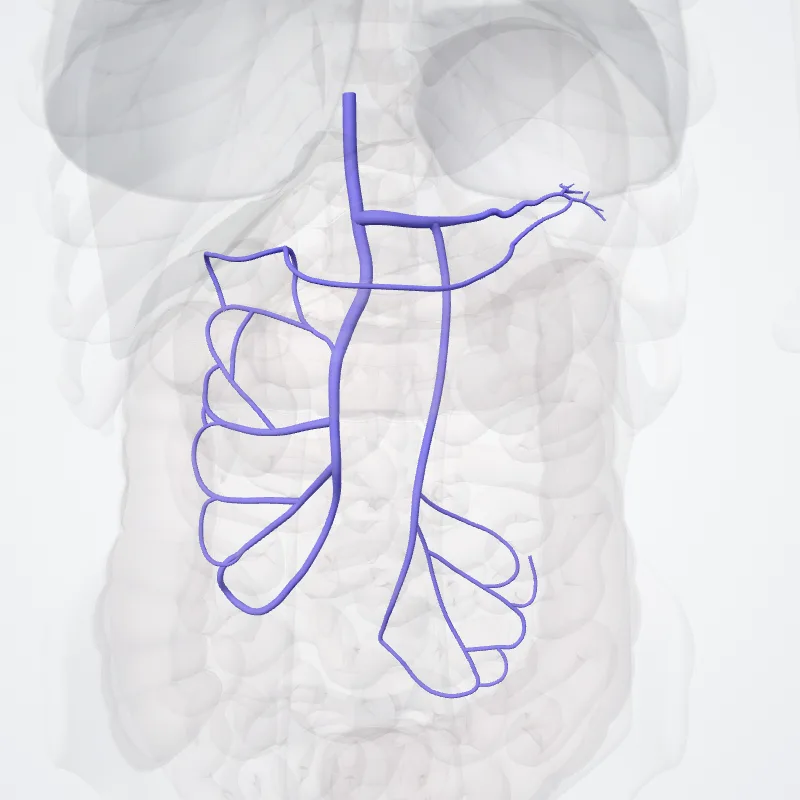
DescriptionUnreviewed
The portal vein or hepatic portal vein (HPV) is a blood vessel that carries blood from the gastrointestinal tract, gallbladder, pancreas and spleen to the liver.
This blood contains nutrients and toxins extracted from digested contents.
Approximately 75% of total liver blood flow is through the portal vein, with the remainder coming from the hepatic artery proper.
The blood leaves the liver to the heart in the hepatic veins.
The portal vein is not a true vein, because it conducts blood to capillary beds in the liver and not directly to the heart.
It is a major component of the hepatic portal system, one of only two portal venous systems in the body – with the hypophyseal portal system being the other.
The portal vein is usually formed by the confluence of the superior mesenteric, splenic veins, inferior mesenteric, left, right gastric veins and the pancreatic vein.
Conditions involving the portal vein cause considerable illness and death.
An important example of such a condition is elevated blood pressure in the portal vein.
This condition, called portal hypertension, is a major complication of cirrhosis.
In abdominal obesity fats, inflammatory cytokines and other toxic substances are transported by the portal vein from visceral fat into the liver, leading to hepatic insulin resistance and non-alcoholic fatty liver disease.
Continue reading on Wikipedia →
Source: Wikipedia · Text licence: CC BY-SA 3.0 · This text comes from the source data and has not been reviewed by a person yet.
Parts
Names
- Latin
- Vena portae hepatis
- English
- Hepatic portal vein
- French
- Veine porte du foie
- Spanish
- Vena porta hepática
- Portuguese
- Veia porta hepática