Nervous system & sense organs
Hypothalamus
- System
- Nervous system & sense organs
- Regions
- Head
- Part of
- Diencephalon
DescriptionUnreviewed
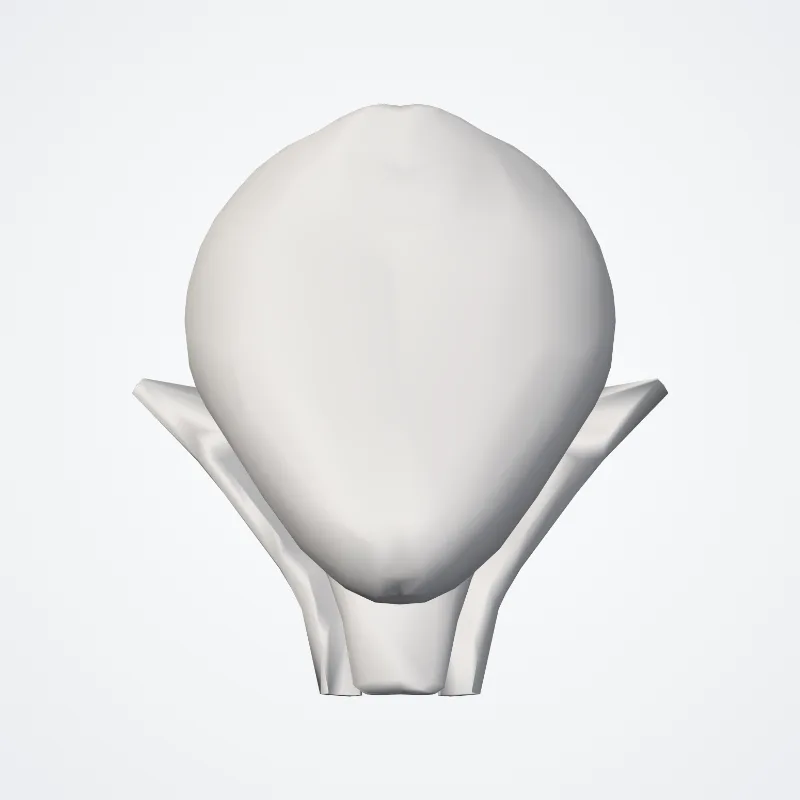
The hypothalamus (from Ancient Greek ὑπό (hupó) 'under', and θάλαμος (thálamos) 'chamber') is a portion of the brain that contains a number of small nuclei with a variety of functions.
One of the most important functions of the hypothalamus is to link the nervous system to the endocrine system via the pituitary gland.
The hypothalamus is located below the thalamus and is part of the limbic system.
In the terminology of neuroanatomy, it forms the ventral part of the diencephalon.
All vertebrate brains contain a hypothalamus.
In humans, it is the size of an almond. The hypothalamus is responsible for the regulation of certain metabolic processes and other activities of the autonomic nervous system.
It synthesizes and secretes certain neurohormones, called releasing hormones or hypothalamic hormones, and these in turn stimulate or inhibit the secretion of hormones from the pituitary gland.
The hypothalamus controls body temperature, hunger, important aspects of parenting and attachment behaviours, thirst, fatigue, sleep, and circadian rhythms.
Continue reading on Wikipedia →
Source: Wikipedia · Text licence: CC BY-SA 3.0 · This text comes from the source data and has not been reviewed by a person yet.
Names
- Latin
- Hypothalamus
- English
- Hypothalamus
- French
- Hypothalamus
- Spanish
- Hipotálamo
- Portuguese
- Hipotálamo