Cardiovascular system
Inferior vena cava (abdominal part)
Vena cava inferior (pars abdominis)
- System
- Cardiovascular system
- Regions
- Trunk
- Part of
- Inferior vena cava (thoracic part)
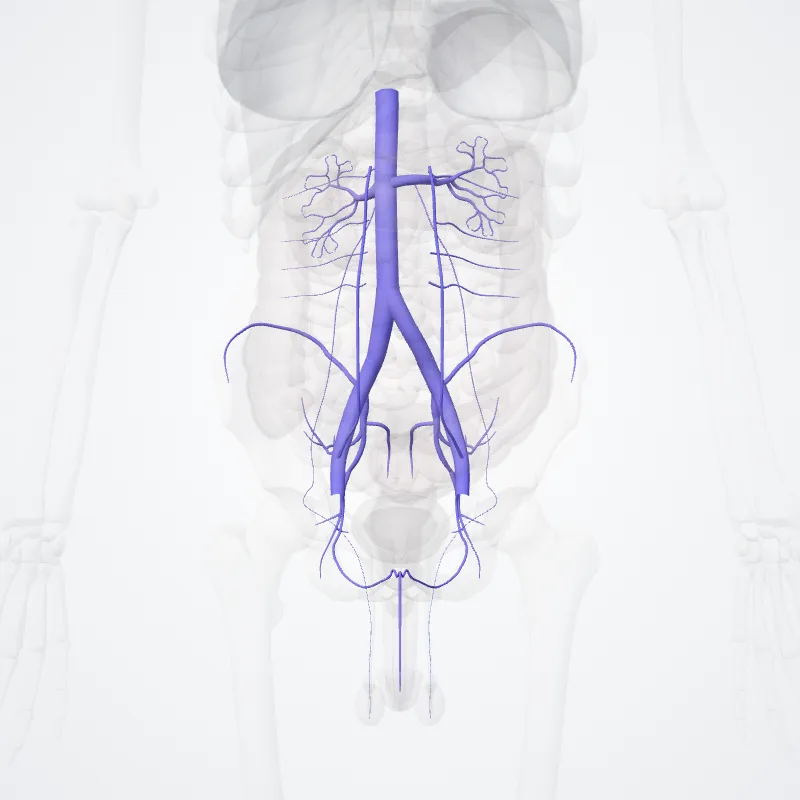
DescriptionUnreviewed
The inferior vena cava is a large vein that carries the deoxygenated blood from the lower and middle body into the right atrium of the heart.
It is formed by the joining of the right and the left common iliac veins, usually at the level of the fifth lumbar vertebra.
The inferior vena cava is the lower ("inferior") of the two venae cavae, the two large veins that carry deoxygenated blood from the body to the right atrium of the heart: the inferior vena cava carries blood from the lower half of the body whilst the superior vena cava carries blood from the upper half of the body.
Together, the venae cavae (in addition to the coronary sinus, which carries blood from the muscle of the heart itself) form the venous counterparts of the aorta.
It is a large retroperitoneal vein that lies posterior to the abdominal cavity and runs along the right side of the vertebral column.
It enters the right auricle at the lower right, back side of the heart.
The name derives from Latin: vena, "vein", cavus, "hollow".
Continue reading on Wikipedia →
Source: Wikipedia · Text licence: CC BY-SA 3.0 · This text comes from the source data and has not been reviewed by a person yet.
Parts
Names
- Latin
- Vena cava inferior (pars abdominis)
- English
- Inferior vena cava (abdominal part)
- French
- Veine cave inférieure (partie abdominale)
- Spanish
- Vena cava inferior (parte abdominal)
- Portuguese
- Veia cava inferior (parte abdominal)