Nervous system & sense organs
Insula (Subcentral gyrus and ant. and post. sulci*)
- System
- Nervous system & sense organs
- Regions
- Head
- Side
- Left and right
- Part of
- Insula
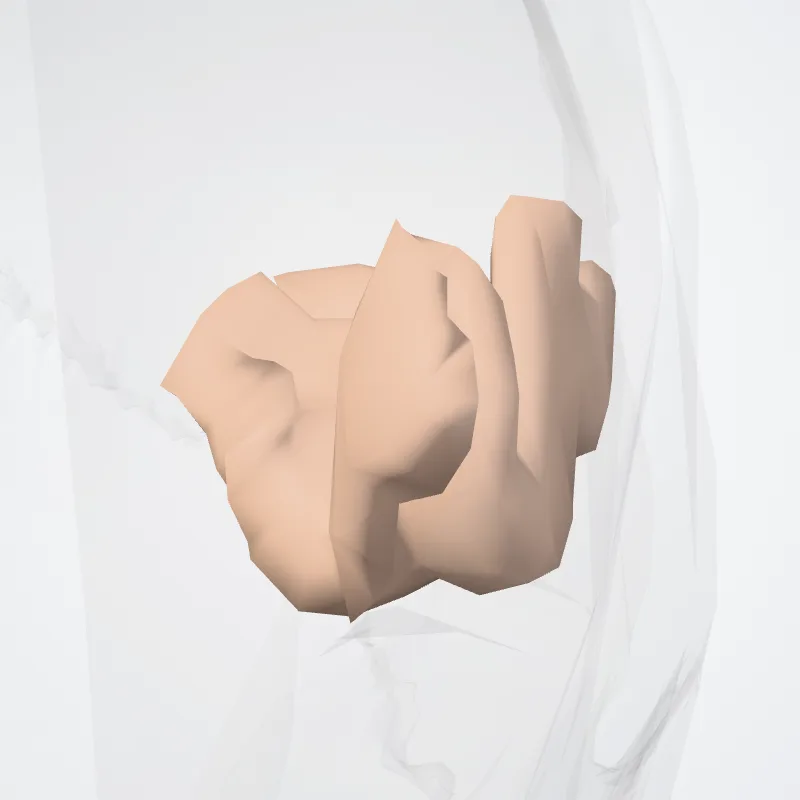
DescriptionUnreviewed
The insular cortex (also insula and insular lobe) is a portion of the cerebral cortex folded deep within the lateral sulcus (the fissure separating the temporal lobe from the parietal and frontal lobes) within each hemisphere of the mammalian brain.
The insulae are believed to be involved in consciousness and play a role in diverse functions usually linked to emotion or the regulation of the body's homeostasis.
These functions include compassion, empathy, taste, perception, motor control, self-awareness, cognitive functioning, interpersonal experience, and awareness of homeostatic emotions such as hunger, pain and fatigue.
In relation to these, it is involved in psychopathology.
The insular cortex is divided into two parts: the anterior insula and the posterior insula in which more than a dozen field areas have been identified.
The cortical area overlying the insula toward the lateral surface of the brain is the operculum (meaning lid).
The opercula are formed from parts of the enclosing frontal, temporal, and parietal lobes.
Continue reading on Wikipedia →
Source: Wikipedia · Text licence: CC BY-SA 3.0 · This text comes from the source data and has not been reviewed by a person yet.
Names
- English
- Insula (Subcentral gyrus and ant. and post. sulci*)