Cardiovascular system
Left atrium
Atrium sinistrum
- System
- Cardiovascular system
- Regions
- Trunk
- Side
- Left
- Part of
- Heart
DescriptionUnreviewed
The atrium (Latin: ātrium, lit. 'entry hall') or auricle is the upper chamber through which blood enters the ventricles of the heart.
There are two atria in the human heart – the left atrium receives blood from the pulmonary (lung) circulation, and the right atrium receives blood from the venae cavae (venous circulation).
The atria receive blood while relaxed (diastole), then contract (systole) to move blood to the ventricles.
All animals with a closed circulatory system have at least one atrium.
Humans have two atria. Formerly, the atrium was called the ‘auricle’.
That term is still used to describe this chamber in some other animals, such as the Mollusca.
They have thicker muscular walls than the atria do.
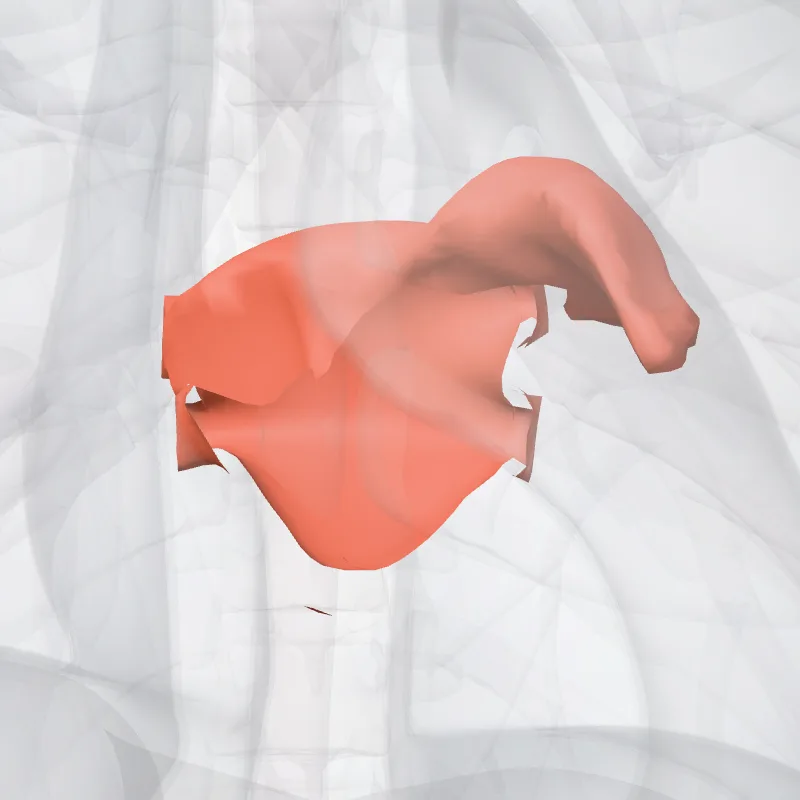
Each atrium is roughly cube-shaped except for an ear-shaped projection called an auricle.
Continue reading on Wikipedia →
Source: Wikipedia · Text licence: CC BY-SA 3.0 · This text comes from the source data and has not been reviewed by a person yet.
Names
- Latin
- Atrium sinistrum
- English
- Left atrium
- French
- Atrium gauche
- Spanish
- Atrio izquierdo
- Portuguese
- Atrium gauche