Group · Nervous system & sense organs
Lumbar plexus
Plexus lumbalis
- System
- Nervous system & sense organs
- Regions
- Trunk, Lower limb, Upper limb
- Part of
- Lumbosacral plexus
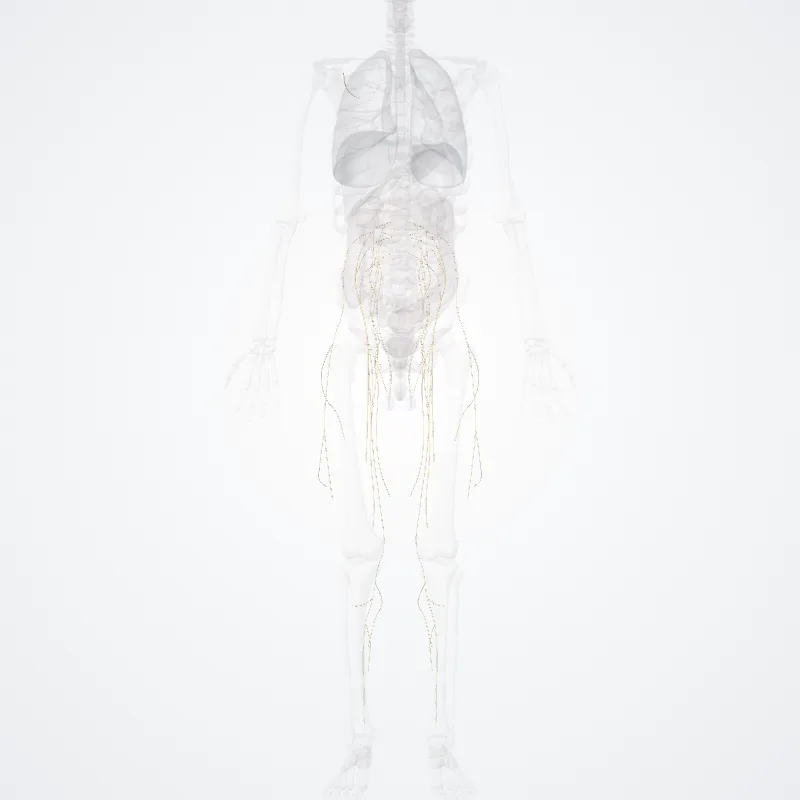
DescriptionUnreviewed
The lumbar plexus is a web of nerves (a nervous plexus) in the lumbar region of the body which forms part of the larger lumbosacral plexus.
It is formed by the divisions of the first four lumbar nerves (L1-L4) and from contributions of the subcostal nerve (T12), which is the last thoracic nerve.
Additionally, the ventral rami of the fourth lumbar nerve pass communicating branches, the lumbosacral trunk, to the sacral plexus.
The nerves of the lumbar plexus pass in front of the hip joint and mainly support the anterior part of the thigh.The plexus is formed lateral to the intervertebral foramina and passes through psoas major.
Its smaller motor branches are distributed directly to psoas major, while the larger branches leave the muscle at various sites to run obliquely down through the pelvis to leave under the inguinal ligament with the exception of the obturator nerve which exits the pelvis through the obturator foramen.
Continue reading on Wikipedia →
Source: Wikipedia · Text licence: CC BY-SA 3.0 · This text comes from the source data and has not been reviewed by a person yet.
Parts
Names
- Latin
- Plexus lumbalis
- English
- Lumbar plexus
- French
- Plexus lombal
- Spanish
- Plexo lumbar
- Portuguese
- Plexo lombar