Group · Lymphoid organs
Primary lymphoid organs
Organa lymphoidea primaria
- System
- Lymphoid organs
- Regions
- Trunk
DescriptionUnreviewed
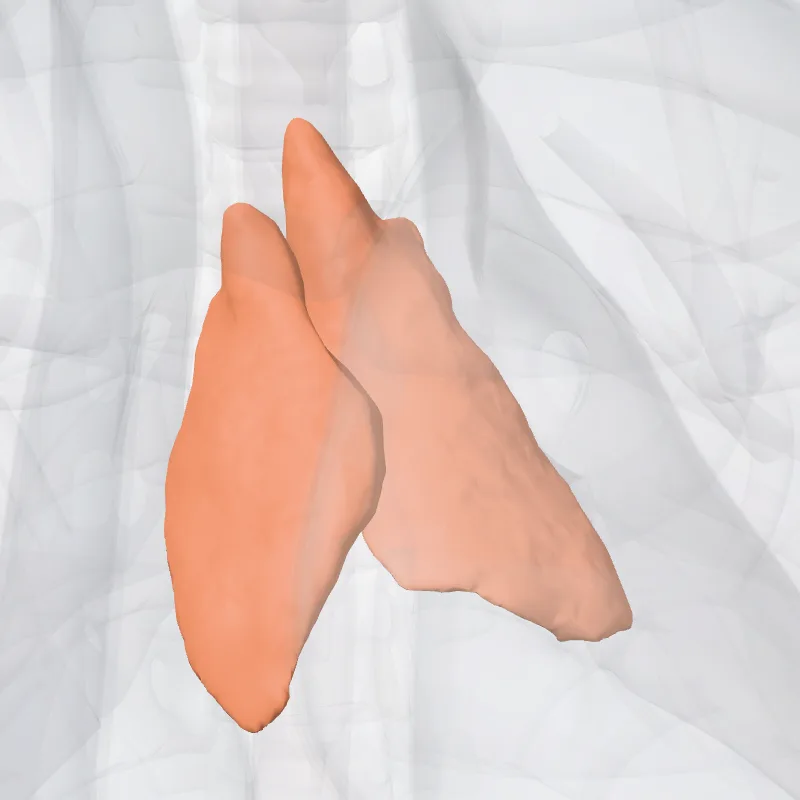
The primary (or central) lymphoid organs generate lymphocytes from immature progenitor cells.
The thymus and the bone marrow constitute the primary lymphoid organs involved in the production and early clonal selection of lymphocyte tissues.
- BONE MARROW:
Bone marrow is responsible for both the creation of T cell precursors and the production and maturation of B cells, which are important cell types of the immune system.
From the bone marrow, B cells immediately join the circulatory system and travel to secondary lymphoid organs in search of pathogens.
T cells, on the other hand, travel from the bone marrow to the thymus, where they develop further and mature.
Mature T cells then join B cells in search of pathogens.
The other 95% of T cells begin a process of apoptosis, a form of programmed cell death.
- THYMUS:
The thymus increases in size from birth in response to postnatal antigen stimulation.
It is most active during the neonatal and pre-adolescent periods.
At puberty, by the early teens, the thymus begins to atrophy and regress, with adipose tissue mostly replacing the thymic stroma.
However, residual T lymphopoiesis continues throughout adult life.
The loss or lack of the thymus results in severe immunodeficiency and subsequent high susceptibility to infection.
In most species, the thymus consists of lobules divided by septa which are made up of epithelium; it is therefore often considered an epithelial organ.
T cells mature from thymocytes, proliferate, and undergo a selection process in the thymic cortex before entering the medulla to interact with epithelial cells.
The thymus provides an inductive environment for the development of T cells from hematopoietic progenitor cells.
In addition, thymic stromal cells allow for the selection of a functional and self-tolerant T cell repertoire.
Therefore, one of the most important roles of the thymus is the induction of central tolerance.
Source: Z-Anatomy · Text licence: CC BY-SA 4.0 · This text comes from the source data and has not been reviewed by a person yet.
Parts
Names
- Latin
- Organa lymphoidea primaria
- English
- Primary lymphoid organs
- French
- Organes lymphoïdes primaires
- Spanish
- Órganos linfoides primarios
- Portuguese
- Órgãos linfóides primários