Group · Visceral systems
Small intestine
Intestinum tenue
- System
- Visceral systems
- Regions
- Trunk, Abdomen
- Part of
- Digestive canal
DescriptionUnreviewed
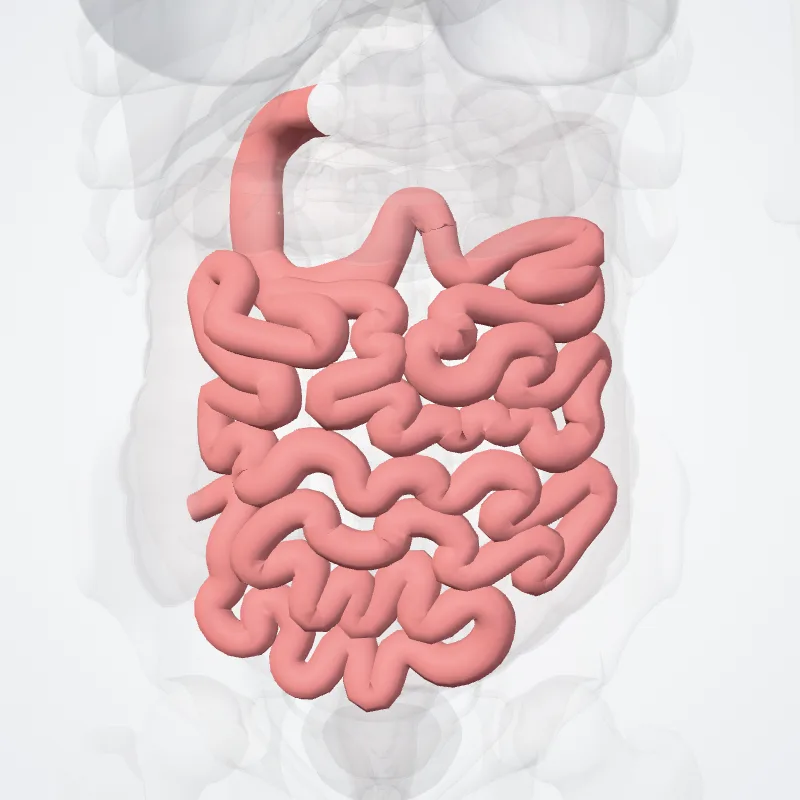
The small intestine or small bowel is an organ in the gastrointestinal tract where most of the absorption of nutrients from food takes place.
It lies between the stomach and large intestine, and receives bile and pancreatic juice through the pancreatic duct to aid in digestion.
The small intestine is about 18 feet (6.5 meters) long and folds many times to fit in the abdomen.
Although it is longer than the large intestine, it is called the small intestine because it is narrower in diameter. The small intestine has three distinct regions – the duodenum, jejunum, and ileum.
The duodenum, the shortest, is where preparation for absorption through small finger-like protrusions called villi begins.
The jejunum is specialized for the absorption through its lining by enterocytes: small nutrient particles which have been previously digested by enzymes in the duodenum.
The main function of the ileum is to absorb vitamin B12, bile salts, and whatever products of digestion that were not absorbed by the jejunum.
Continue reading on Wikipedia →
Source: Wikipedia · Text licence: CC BY-SA 3.0 · This text comes from the source data and has not been reviewed by a person yet.
Parts
Names
- Latin
- Intestinum tenue
- English
- Small intestine
- French
- Intestin grêle
- Spanish
- Intestino delgado
- Portuguese
- Intestino delgado