Nervous system & sense organs
Superior cerebellar peduncle
Pedunculus cerebellaris superior
- System
- Nervous system & sense organs
- Regions
- Head
- Side
- Left and right
- Part of
- Cerebellum
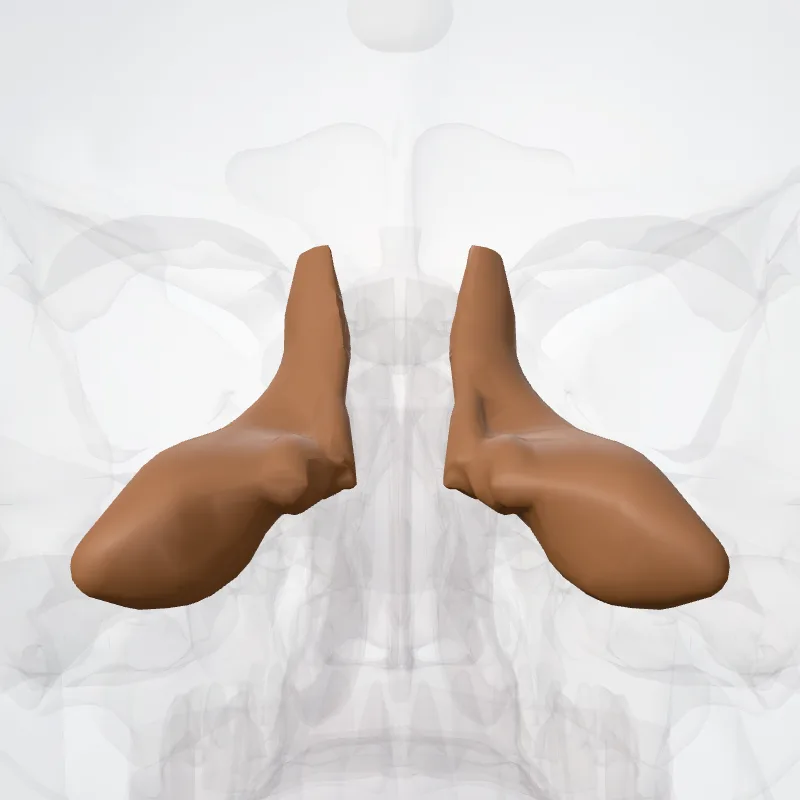
DescriptionUnreviewed
In the human brain, the superior cerebellar peduncle (brachium conjunctivum) is a paired structure of white matter that connects the cerebellum to the midbrain.
It consists mainly of efferent fibers, the cerebellothalamic tract that runs from a cerebellar hemisphere to the contralateral thalamus, and the cerebellorubral tract that runs from a cerebellar hemisphere to the red nucleus.
It also contains afferent tracts, most prominent of which is the ventral spinocerebellar tract.
Other afferent tracts are the trigeminothalamic fibers, tectocerebellar fibers, and noradrenergic fibers from the locus coeruleus.
The superior peduncle emerges from the upper and medial parts of the white matter of each hemisphere and is placed under cover of the upper part of the cerebellum.
Continue reading on Wikipedia →
Source: Wikipedia · Text licence: CC BY-SA 3.0 · This text comes from the source data and has not been reviewed by a person yet.
Names
- Latin
- Pedunculus cerebellaris superior
- English
- Superior cerebellar peduncle
- French
- Pédoncule cérébelleux supérieur
- Spanish
- Pedúnculo cerebeloso superior
- Portuguese
- Pedúnculo cerebelar superior
In the same group
- Anterior quadrangular lobule
- Biventral lobule
- Central lobule
- Cerebellar peduncles
- Culmen
- Declive
- Flocculus
- Folium of vermis
- Gracile lobule
- Inferior semilunar lobule
- Lingula of cerebellum
- Nodule of vermis
- Peduncle of flocculus
- Posterior quadrangular lobule
- Pyramis of vermis
- Superior semilunar lobule
- Tonsil of cerebellum
- Tuber of vermis
- Uvula of vermis
- Wing of central lobule