Nervous system & sense organs
Transverse temporal gyri
Gyri temporales transversi
- System
- Nervous system & sense organs
- Regions
- Head
- Side
- Left and right
- Part of
- Temporal lobe
DescriptionUnreviewed
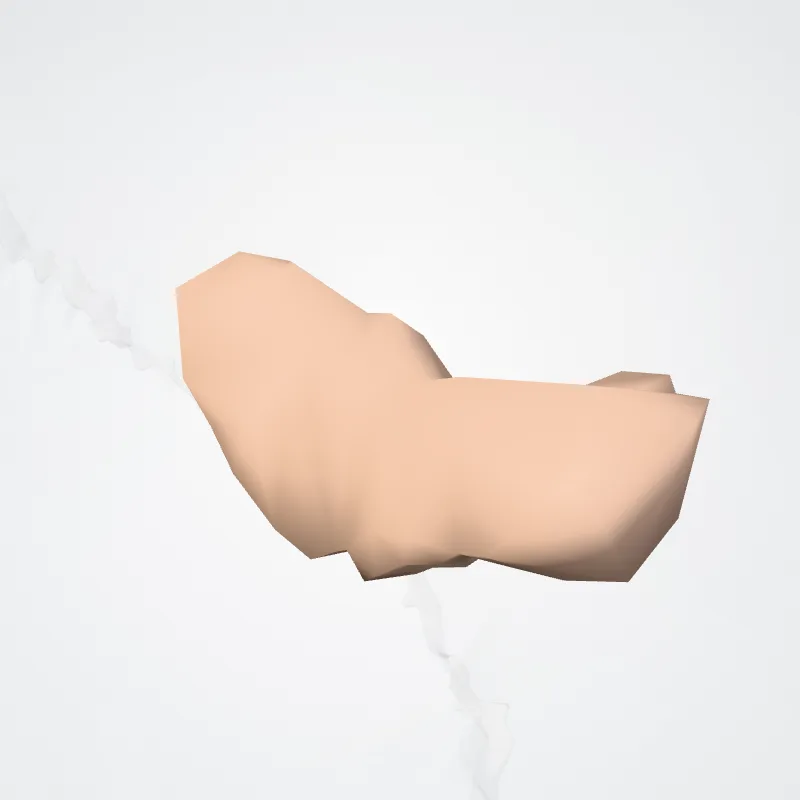
The transverse temporal gyri, also called Heschl's gyri or Heschl's convolutions, are gyri found in the area of primary auditory cortex buried within the lateral sulcus of the human brain, occupying Brodmann areas 41 and 42.
Transverse temporal gyri are superior to and separated from the planum temporale (cortex involved in language production) by Heschl’s sulcus.
Transverse temporal gyri are found in varying numbers in both the right and left hemispheres of the brain and one study found that this number is not related to the hemisphere or dominance of hemisphere studied in subjects.
Transverse temporal gyri can be viewed in the sagittal plane as either an omega shape (if one gyrus is present) or a heart shape (if two gyri and a sulcus are present).Transverse temporal gyri are the first cortical structures to process incoming auditory information.
Anatomically, the transverse temporal gyri are distinct in that they run mediolaterally (toward the center of the brain), rather than front to back as all other temporal lobe gyri run.
The Heschl's gyri are named after Richard L. Heschl.
Continue reading on Wikipedia →
Source: Wikipedia · Text licence: CC BY-SA 3.0 · This text comes from the source data and has not been reviewed by a person yet.
Names
- Latin
- Gyri temporales transversi
- English
- Transverse temporal gyri
- French
- Gyrus temporal transverse
- Spanish
- Giros temporales transversos
- Portuguese
- Giros temporais transversais