Nervensystem und Sinnesorgane
Corpus amygdaloideum
Amygdaloid body
- System
- Nervensystem und Sinnesorgane
- Regionen
- Kopf
- Seite
- Links und rechts
- Teil von
- Pars basalis telencephali
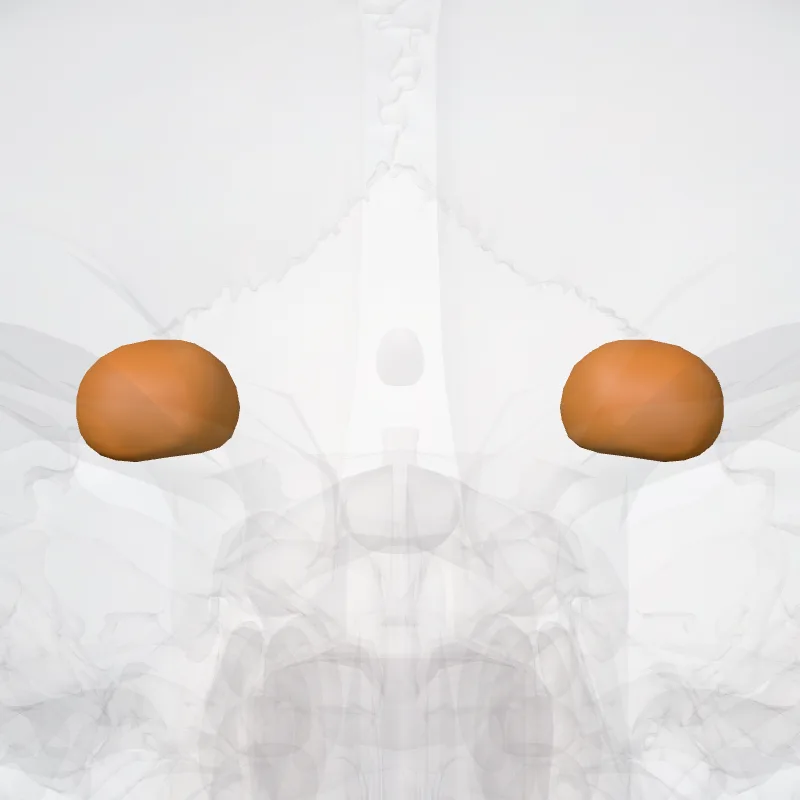
BeschreibungUngeprüft
Beschreibungen gibt es nur auf Englisch.
The amygdala (plural: amygdalae or amygdalas; also corpus amygdaloideum; Latin from Greek, ἀμυγδαλή, amygdalē, 'almond', 'tonsil') is one of two almond-shaped clusters of nuclei located deep and medially within the temporal lobes of the brain's cerebrum in complex vertebrates, including humans.
Shown to perform a primary role in the processing of memory, decision making, and emotional responses (including fear, anxiety, and aggression), the amygdalae are considered part of the limbic system.
The term amygdala was first introduced by Karl Friedrich Burdach in 1822.
Quelle: Wikipedia · Textlizenz: CC BY-SA 3.0 · Dieser Text stammt aus den Quelldaten und wurde noch nicht von einer Person geprüft.
Namen
- Latein
- Corpus amygdaloideum
- Englisch
- Amygdaloid body
- Französisch
- Corps amygdaloïde
- Spanisch
- Cuerpo amigdaloide
- Portugiesisch
- Corpo amigdalóide