DescriptionUnreviewed
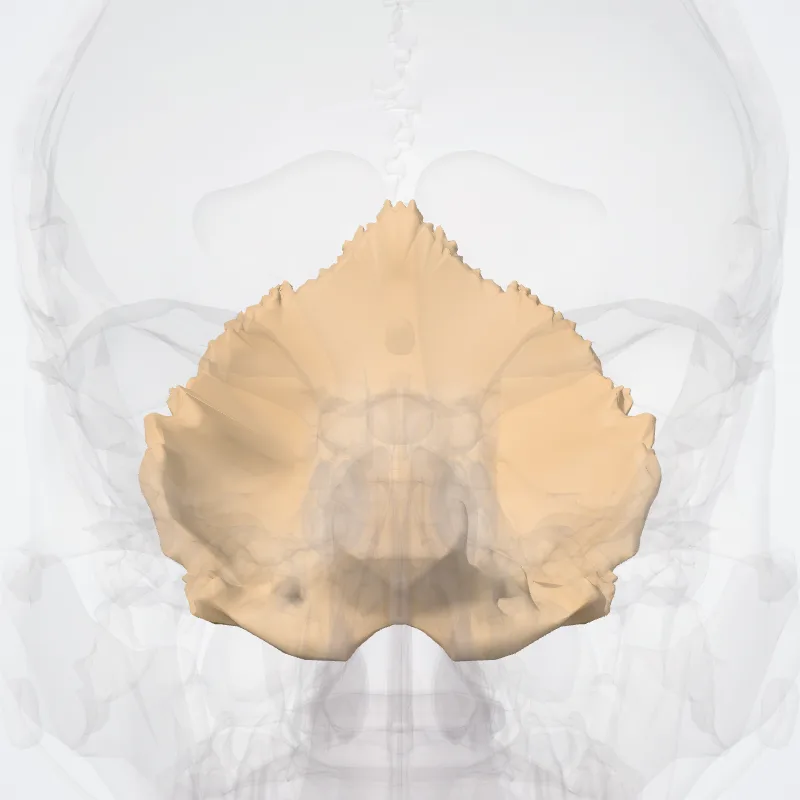
The foramen magnum (Latin: great hole) is a large oval opening (foramen) in the occipital bone of the skull in humans and many other animals.
It is one of the several oval or circular openings (foramina) in the base of the skull.
The spinal cord, an extension of the medulla oblongata, passes through the foramen magnum as it exits the cranial cavity.
Apart from the transmission of the medulla oblongata and its membranes, the foramen magnum transmits the vertebral arteries, the anterior and posterior spinal arteries, the tectorial membranes and alar ligaments.
It also transmits the accessory nerve into the skull.
The foramen magnum is a very important feature in bipedal mammals.
One of the attributes of a biped's foramen magnum is a forward shift of the anterior border of the cerebellar tentorium; this is caused by the shortening of the cranial base.
Studies on the foramen magnum position have shown a connection to the functional influences of both posture and locomotion.
The forward shift of the foramen magnum is apparent in bipedal hominins, including modern humans, Australopithecus africanus, and Paranthropus boisei.
This common feature of bipedal hominins is the driving argument used by Michel Brunet that Sahelanthropus tchadensis was also bipedal, and may be the earliest known bipedal ape.
The discovery of this feature has given scientists another form of identifying bipedal mammals.
Source: Wikipedia · Text licence: CC BY-SA 3.0 · This text comes from the source data and has not been reviewed by a person yet.
Names
- Latin
- Foramen magnum
- English
- Foramen magnum
- French
- Foramen magnum
- Spanish
- Foramen magnum
- Portuguese
- Forame magno