Group · Lymphoid organs
Lymph nodes
Nodi lymphoidei
- System
- Lymphoid organs
- Regions
- Trunk, Head, Lower limb, Neck, Upper limb
- Part of
- Secondary lymphoid organs
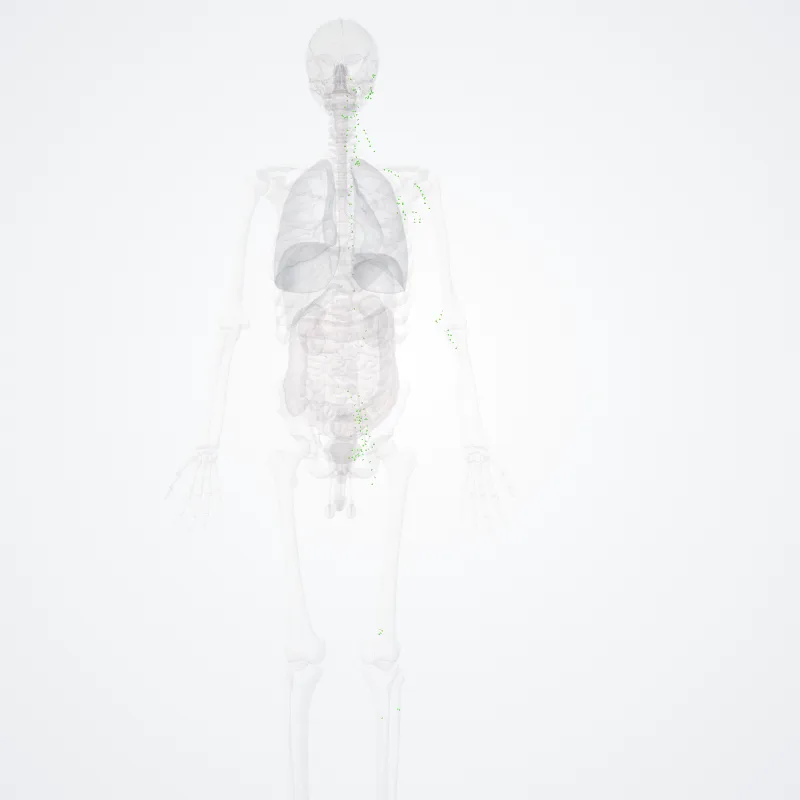
DescriptionUnreviewed
A lymph node, or lymph gland, is a kidney-shaped organ of the lymphatic system, and the adaptive immune system.
A large number of lymph nodes are linked throughout the body by the lymphatic vessels.
They are major sites of lymphocytes that include B and T cells.
Lymph nodes are important for the proper functioning of the immune system, acting as filters for foreign particles including cancer cells, but have no detoxification function.
In the lymphatic system a lymph node is a secondary lymphoid organ.
A lymph node is enclosed in a fibrous capsule and is made up of an outer cortex and an inner medulla.
Lymph nodes become inflamed or enlarged in various diseases, which may range from trivial throat infections to life-threatening cancers.
The condition of lymph nodes is very important in cancer staging, which decides the treatment to be used and determines the prognosis.
Lymphadenopathy refers to glands that are enlarged or swollen.
When inflamed or enlarged, lymph nodes can be firm or tender.
Continue reading on Wikipedia →
Source: Wikipedia · Text licence: CC BY-SA 3.0 · This text comes from the source data and has not been reviewed by a person yet.
Parts
Names
- Latin
- Nodi lymphoidei
- English
- Lymph nodes
- French
- Lymphonoeuds
- Spanish
- Nodos linfáticos
- Portuguese
- Linfonodos