Landmark · Skeletal system
(Mandibular symphysis)
(Symphysis mandibulae)
- System
- Skeletal system
- Regions
- Head
- Landmark on
- Mandible
DescriptionUnreviewed
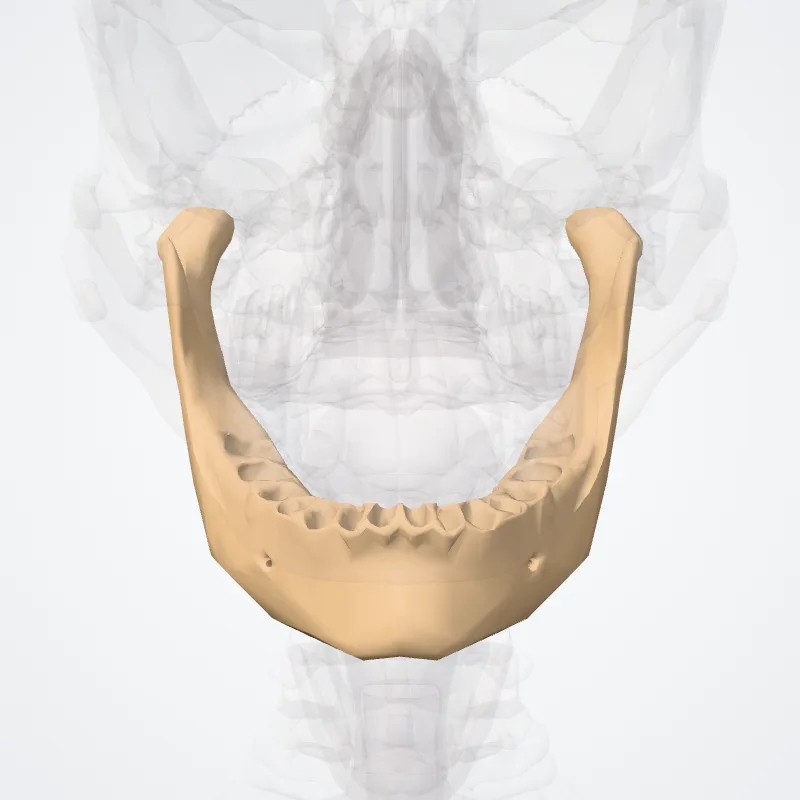
In human anatomy, the facial skeleton of the skull the external surface of the mandible is marked in the median line by a faint ridge, indicating the mandibular symphysis or line of junction where the two lateral halves of the mandible typically fuse at an early period of life (1-2 years).
It is not a true symphysis as there is no cartilage between the two sides of the mandible.
This ridge divides below and encloses a triangular eminence, the mental protuberance, the base of which is depressed in the center but raised on either side to form the mental tubercle.
The lowest (most inferior) end of the mandibular symphysis — the point of the chin — is called the "menton".
It serves as the origin for the geniohyoid and the genioglossus muscles.
Source: Wikipedia · Text licence: CC BY-SA 3.0 · This text comes from the source data and has not been reviewed by a person yet.
Names
- Latin
- (Symphysis mandibulae)
- English
- (Mandibular symphysis)
- French
- (Symphyse mandibulaire)
- Spanish
- (Sínfisis de la mandibula)
- Portuguese
- (Sínfise mandibular)